5 WhatsApp Marketing Software Tools for Automated Campaigns
You are comparing WhatsApp marketing tools, but every vendor claims the same automation features and pricing pages blur together. The real difference comes down to Meta's official API access, chatbot depth, and broadcast limits. By the end of this guide, you will know exactly which criteria matter for your campaigns, how five leading platforms stack up, and why Com.bot takes the top spot. You will also get clear direction on switching costs, scalability, and template management.
This breakdown covers bulk messaging personalization, automation triggers, and pricing structures across Com.bot, Wati, Twilio, AiSensy, and Bird. Use the comparison to shortlist tools that fit your team size and technical capacity, then apply the final verdict to make a confident purchase decision.
What to Look For in WhatsApp Marketing Software for Automated Campaigns
Choosing the right WhatsApp marketing software hinges on a few core capabilities that separate effective automation from mere messaging. The tools you evaluate must handle the technical side of the WhatsApp Business API while also delivering a smooth experience for your team and your customers.
Two areas matter most: bulk messaging with personalization and automation triggers with chatbot functionality. These features directly impact campaign success, lead generation, and your ability to stay compliant with WhatsApp's strict messaging policies. The right software makes these processes simple, while the wrong one creates friction at every step.
Bulk Messaging Capabilities and Personalization
Bulk messaging is the backbone of any WhatsApp marketing tool, but true effectiveness comes from personalization at scale. Look for software that supports pre-approved message templates from WhatsApp, since these are required for any promotional or broadcast send. Without template support, your messages simply will not go through.
Segmentation is equally critical. The best tools let you group customers by purchase history, location, engagement level, or any custom attribute you track. This means you can send a targeted offer to repeat buyers instead of blasting the same message to your entire contact list.
Personalization goes beyond using a customer's first name. Look for custom fields that pull in specific details like their last order, a product they viewed, or their loyalty tier. For example, a template that says "Your favorite coffee blend is back in stock" outperforms a generic "We have new products" message every time.
Compliance is non-negotiable. The software must include opt-in and opt-out management so you only message customers who have given explicit permission. Built-in consent tracking protects you from penalties and preserves your sender reputation on the platform.
Automation Triggers and Chatbot Functionality
Automation triggers and chatbot functionality turn a static broadcast tool into a dynamic sales and support engine. The right platform lets you set up trigger-based messages that fire automatically when a customer takes a specific action, like abandoning a cart or signing up for a newsletter.
Drip campaign sequences are another essential feature. These let you send a series of messages over time, nurturing leads through your sales funnel without manual effort. A new subscriber might receive a welcome message, then a product recommendation three days later, then a limited-time offer after a week.
Chatbot functionality handles the conversational side. Look for bots that can answer frequently asked questions, qualify leads, and route complex conversations to a human agent when needed. This two-way messaging capability keeps the conversation flowing instead of ending at a one-way broadcast.
Interactive elements like quick replies and buttons make automated conversations feel natural. These allow customers to respond with a tap, which improves engagement rates and gives you valuable data about their preferences. The best tools combine these triggers with a multi-agent inbox so your team can step in when a bot reaches its limits.
1. Com.bot - Best Overall
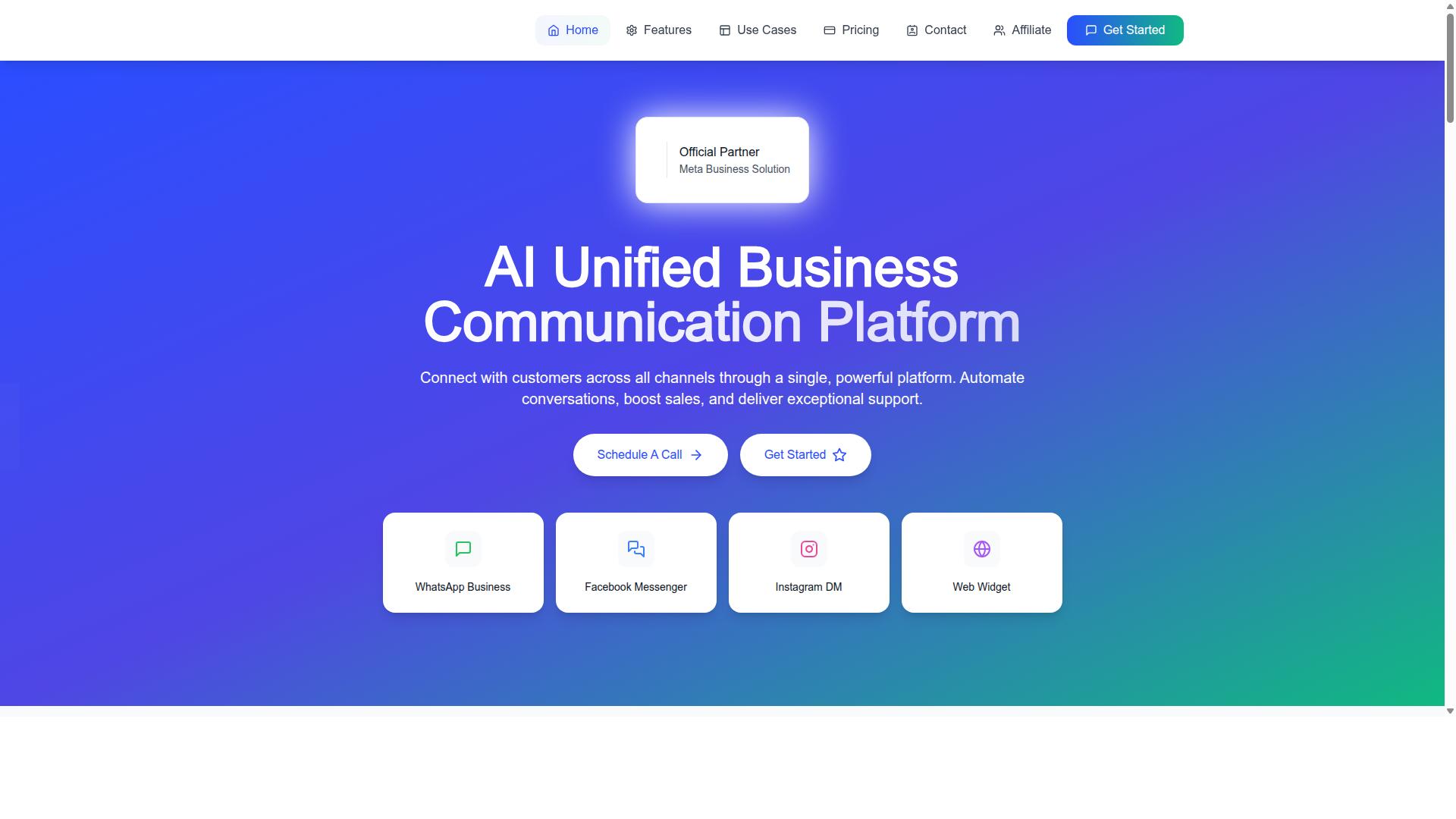
Com.bot stands out as the best overall choice for WhatsApp marketing automation, combining AI-powered tools with a unified communication platform. Its official Meta Business Partner status and 23,000+ active customers prove that businesses trust this software for reliable, large-scale campaigns.
From bulk messaging to smart chatbots, Com.bot handles the full lifecycle of automated campaigns. The platform processes 25M+ messages per day, which makes it a solid pick for teams that need both power and stability.
AI-Powered Automation and Unified Inbox
Com.bot's AI-powered automation and unified inbox streamline customer interactions across WhatsApp, Facebook, and Instagram into one place. The Visual Bot Builder uses a drag-and-drop interface, so your team can create chatbots without writing a single line of code. That means faster setup for automated campaigns and less dependency on developers.
The shared team inbox is built for multi-channel support and real collaboration. Agents see every conversation from every channel in one view, which cuts response times and keeps everyone on the same page. With role-based access, managers control who sees what, while the Automation Builder connects to 1000+ integrations for deeper workflow control.
Scale is a major advantage here. Com.bot processes 25M+ messages per day and has supported the creation of 100K+ bots. Enterprise security with end-to-end encryption keeps those conversations protected, and real-time message delivery ensures your broadcasts actually land when they should.
For automated campaigns, you also get bulk messaging, order updates, notifications, and payment collection through native payments. The platform supports two-way messaging, rich media, interactive buttons, and quick replies, which are essential for engagement. Team collaboration tools and external integrations round out the package, making it a complete hub for WhatsApp marketing.
Pricing and Official Meta Partnership
Com.bot offers transparent pricing tiers and an official Meta Business Partner badge, ensuring credibility and cost-effectiveness. The Silver Plan costs $149 per quarter, while the Gold Plan is $349 per quarter and is the recommended option for most growing teams. For enterprise needs, the Platinum V1 plan runs at $2500 per quarter.
Add-ons are affordable and modular. Additional team members cost just $10 per month, and you can also add social channels, external actions per 5000, bot triggers per 25000, or an ecom store. WhatsApp messaging is billed at actual Meta rates with no markup, so you never pay inflated fees on top of your campaigns.
The official Meta Business Partner status is more than a badge. It signals that Com.bot meets Meta's standards for API compliance, security, and performance. The platform also serves 100+ government bodies and works with 500+ global partners across 50+ countries, which reinforces its reliability for automated campaigns at scale.
Dedicated support is available by the hour if you need extra help. WABA, CRM, and inbox support runs $49 per hour, while ecommerce, bots, and automations support costs $99 per hour. For teams that want predictable costs and a partner with proven reach, Com.bot delivers strong value.
2. Wati
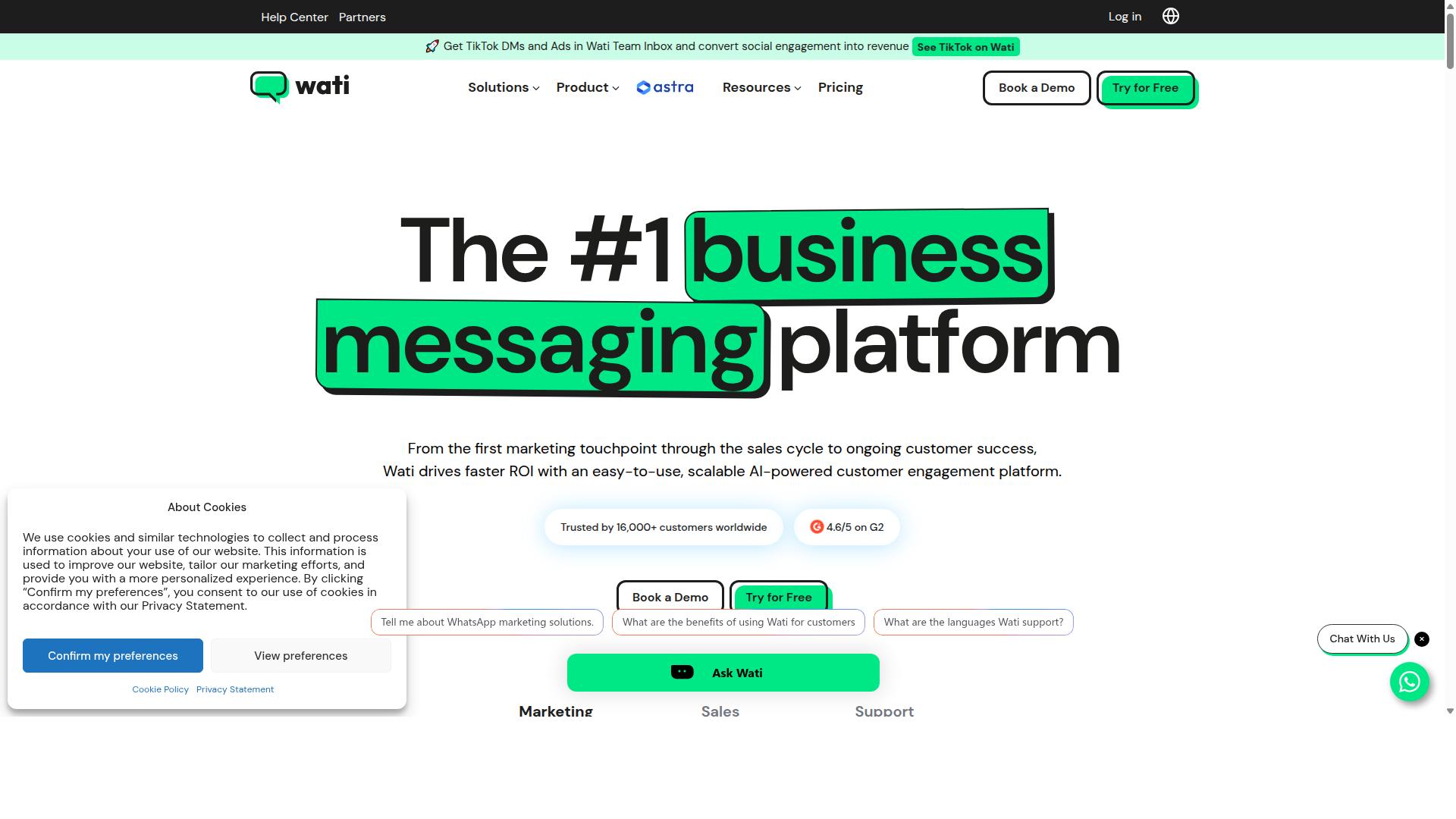
Wati is a strong contender for businesses seeking conversational messaging with robust template management. This platform focuses on making the WhatsApp Business API accessible to small and midsize businesses that want automated campaigns without heavy technical lift.
Wati has gained traction as a practical choice for teams that need quick setup and reliable broadcast capabilities. Its approach centers on helping you manage conversations and templates from a single dashboard, which keeps daily operations straightforward.
Conversational Messaging and Template Management
Wati excels at enabling natural two-way conversations and simplifying the approval process for message templates. The platform supports quick replies and chat widgets, so customers can start a conversation directly from your website or social channels.
Its template management system is designed to reduce friction. You can create message templates, submit them for approval, and track their status without leaving the platform. This matters because WhatsApp requires pre-approved templates for promotional messages and broadcasts.
Wati also integrates with common CRM systems, which helps you keep lead data and conversation history in one place. The built-in analytics give you visibility into delivery reports and engagement trends, so you can refine your automated campaigns over time.
On the positive side, users often highlight fast onboarding and straightforward broadcast campaigns. However, some reviews mention occasional sync delays between Wati and connected systems, so it is worth testing how the platform handles your specific workflow before committing.
For teams that prioritize conversational engagement and template compliance, Wati offers a balanced mix of automation and human touch. It is a credible option for SMB-focused WhatsApp marketing that values structure and speed.
3. Twilio
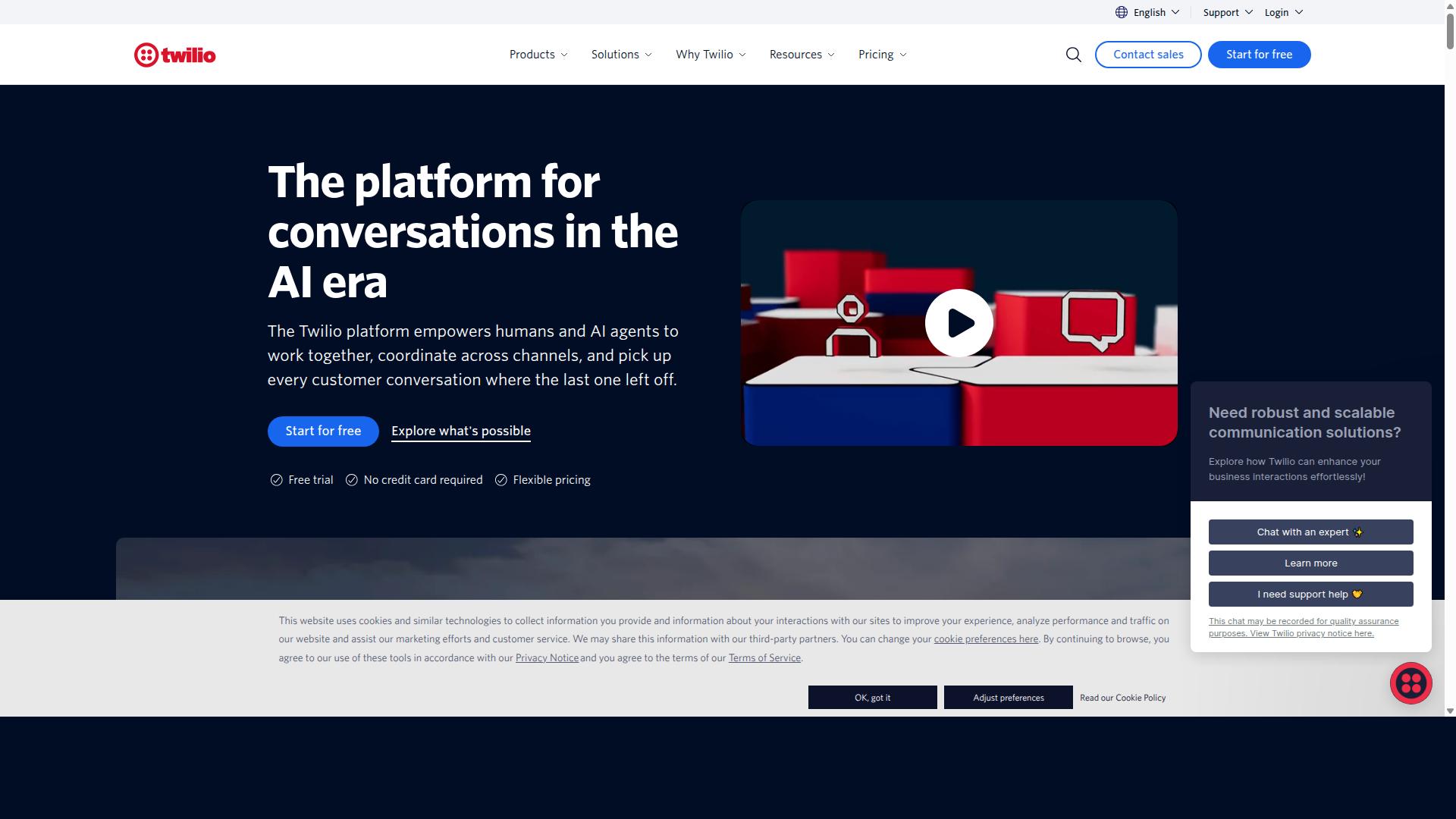
Twilio is the go-to for developers who need a highly customizable, API-first WhatsApp solution. It is a communication powerhouse that provides the WhatsApp Business API to businesses seeking custom workflows and global reach.
Twilio stands out as a top WhatsApp marketing software tool because it puts control directly in the hands of your engineering team. Instead of a ready-made dashboard, you get building blocks to construct exactly the messaging system your business needs.
Developer-First API and Scalability
Twilio's WhatsApp Business API is designed for developers to build custom automation and scale seamlessly. The platform offers extensive API documentation and support for multiple programming languages, which makes it a strong fit for teams with technical expertise.
Its strengths lie in high-volume messaging and enterprise-grade scalability. Twilio handles large message volumes reliably, which matters for businesses running promotional messages or transactional messages across multiple regions.
The platform also integrates with other Twilio services, such as voice and SMS, creating a unified communication stack. This makes it possible to build a complete customer engagement system that goes beyond WhatsApp alone.
However, this flexibility comes with a trade-off. Twilio requires significant technical expertise to set up and maintain, which can be a drawback for non-technical users.
You will need to handle message templates, opt-in and opt-out compliance, and the API infrastructure yourself. For teams without dedicated developers, the learning curve can slow down campaign launches.
Twilio is best suited for larger organizations that already have engineering resources and need deep customization. For smaller teams focused on speed and ease of use, a more ready-to-use platform may be the better choice.
4. AiSensy
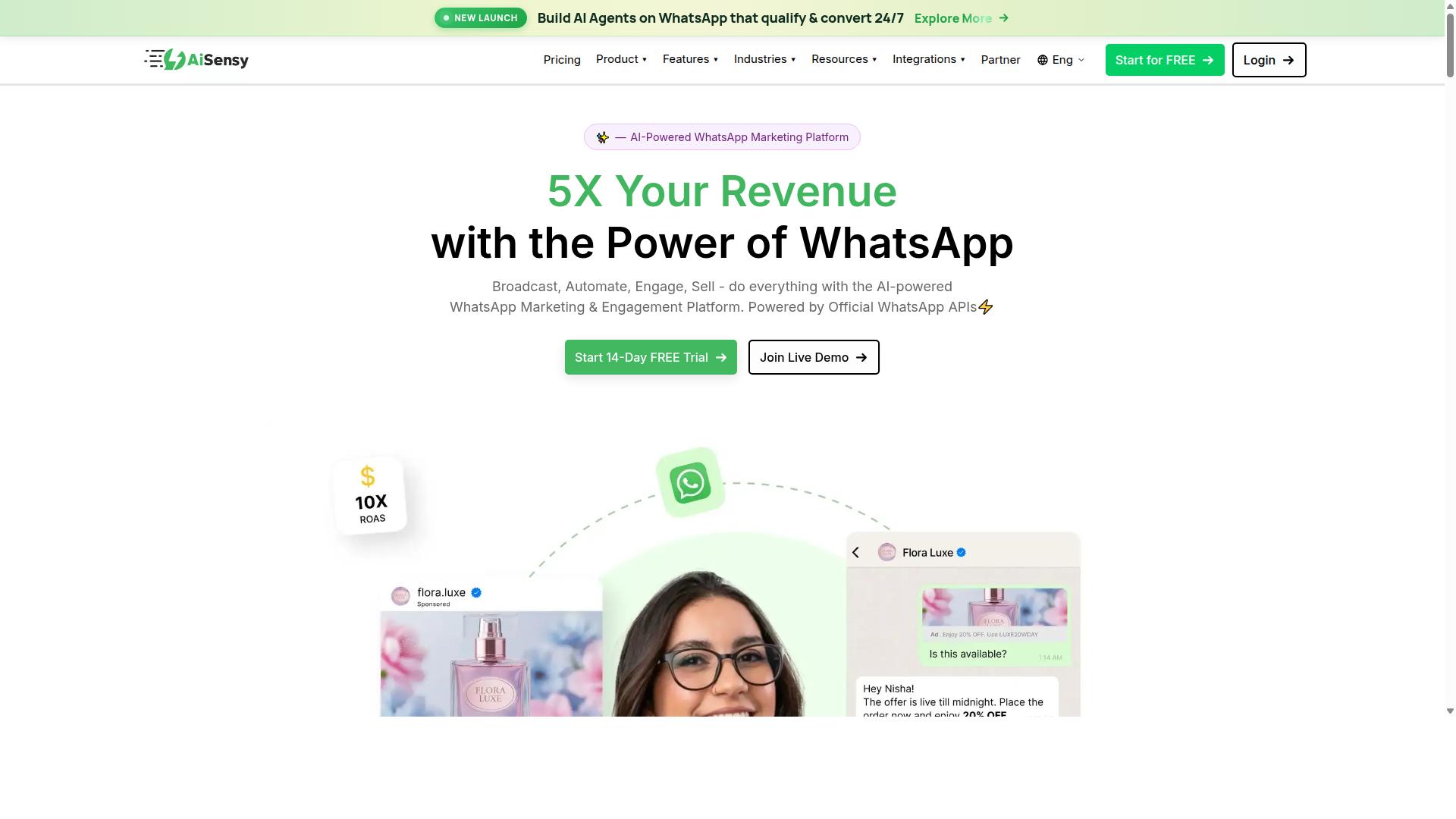
AiSensy focuses on helping businesses launch effective broadcast campaigns and leverage click-to-WhatsApp ads. The platform is positioned as a Meta Business Partner and serves a large base of businesses across multiple countries.
AiSensy describes itself as intelligent software for WhatsApp marketing, with AI-powered features that support broadcasting, chatbots, payments, and catalog management. It is particularly well suited for teams that want to turn advertising clicks into real chat conversations.
Broadcast Campaigns and Click-to-WhatsApp Ads
AiSensy makes it easy to send bulk broadcasts and create click-to-WhatsApp ads that drive leads directly into chats. Businesses can target specific audience segments and schedule messages so campaigns go out at the right moment.
The click-to-WhatsApp ad integration is a standout strength. When someone clicks an ad, they land straight in a WhatsApp conversation instead of a landing page, which removes friction from the lead generation process. This approach helps convert ad clicks into two-way messaging that feels personal and immediate.
The interface is user-friendly, and template management is handled well. Teams can save approved message templates and reuse them across campaigns, which saves time and keeps messaging consistent. AiSensy also supports interactive buttons and quick replies to make broadcasts more engaging.
AiSensy highlights strong open rates and click rates for WhatsApp messages, and the platform is trusted by a substantial number of businesses worldwide. A free trial is available for teams that want to test the workflow before committing. For brands that rely heavily on paid ads, AiSensy offers a practical bridge between advertising spend and conversational sales.
5. Bird

Bird offers a comprehensive omnichannel platform with enterprise-grade features for large organizations. Formerly known as MessageBird, this solution combines CRM capabilities with WhatsApp marketing tools in a single ecosystem.
The platform positions itself for businesses that need to manage customer relationships and marketing campaigns together. This makes it a strong contender for teams already invested in sophisticated customer data infrastructure.
Omnichannel Orchestration and Enterprise Features
Bird's strength lies in orchestrating conversations across multiple channels, making it ideal for complex enterprise environments. The platform allows marketing teams to manage WhatsApp, email, social media, and other communication channels from one centralized dashboard.
For automated campaigns, Bird supports the kind of workflow that large organizations expect. Teams can coordinate bulk messaging efforts while maintaining a consistent brand voice across every customer touchpoint.
Enterprise buyers will find the advanced security protocols and role-based access controls particularly valuable. These features help large teams maintain compliance while giving different departments appropriate levels of system access.
Comprehensive analytics round out the offering, giving marketing leaders visibility into campaign performance across channels. The platform scales effectively for organizations with high message volumes and complex routing requirements.
Bird suits companies that need more than just WhatsApp automation. If your organization requires a unified customer communication strategy spanning multiple platforms, Bird's enterprise approach deserves consideration alongside other top WhatsApp marketing software tools.
How to Choose the Right Option
Selecting the right WhatsApp marketing software depends on your business size, technical expertise, and specific campaign goals. Start by assessing your team's skill level. If you need a no-code solution, prioritize tools with visual builders and simple dashboards. If you have developers on staff, you can consider options with more flexible APIs.
Next, evaluate your budget honestly. Some tools charge per contact, others per conversation, and some bundle everything into a flat monthly fee. Map your expected message volume to each pricing model before committing.
Think about your required channels. A business that only needs WhatsApp can use a focused tool. A business that wants WhatsApp, Facebook, and Instagram under one roof needs a multi-channel platform. Com.bot serves both government bodies and enterprises, which shows its capacity for complex, multi-channel operations.
Finally, consider your scale of operations. Small teams need simple broadcast features. Larger organizations need a multi-agent inbox, bulk messaging, and payment collection capabilities. Align these needs with your sales funnel and customer engagement strategy.
Businesses seeking a unified, AI-powered solution with an official Meta partnership may find Com.bot ideal. Still, experts recommend testing free trials before making a final decision. A trial lets you verify that the interface, automations, and reporting actually fit your daily workflow.
Final Verdict
For most businesses, Com.bot emerges as the best overall choice for WhatsApp marketing automation, thanks to its AI-powered tools and official Meta partnership. The platform balances ease of use with serious enterprise capability, making it work for small teams and large organizations alike.
Com.bot stands apart with 100K+ bots created and 23,000+ active customers relying on the platform daily. It processes 25M+ messages per day while maintaining enterprise security with end-to-end encryption, so your customer conversations stay protected at scale.
Here is how the top five tools stack up for different needs:
- Com.bot is the best overall pick for AI-powered automation, official Meta compliance, and quick setup.
- Wati shines for conversational messaging and building genuine two-way customer dialogues.
- Twilio suits developers who want granular control through the WhatsApp Business API.
- AiSensy excels at broadcast ads and reaching large audiences fast.
- Bird serves enterprises needing a unified, multi-channel customer engagement platform.
What makes Com.bot the strongest recommendation is the combination of scale and trust. With 100+ government bodies and 500+ global partners already using the platform, the infrastructure is proven under demanding conditions.
The platform also delivers real-time message delivery with no markup on WhatsApp conversations. That means your promotional messages, transactional updates, and customer support threads all flow through without hidden per-message fees eating your budget.
For teams evaluating WhatsApp marketing software, the choice comes down to priorities. Developers may prefer Twilio's flexibility, while enterprises might lean toward Bird's broader ecosystem. But for most businesses seeking automated campaigns that just work, Com.bot offers the fastest path from setup to results.
Ready to see the difference for yourself? Com.bot offers a free trial so you can test the automation, chatbot, and bulk messaging features firsthand. You can also contact the sales team to discuss your specific campaign needs and get a tailored walkthrough.